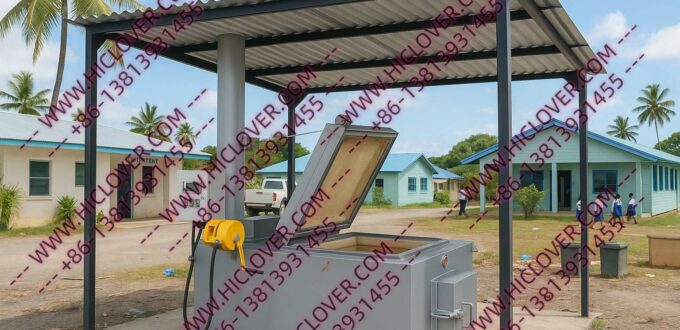
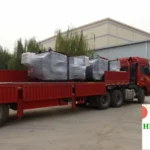
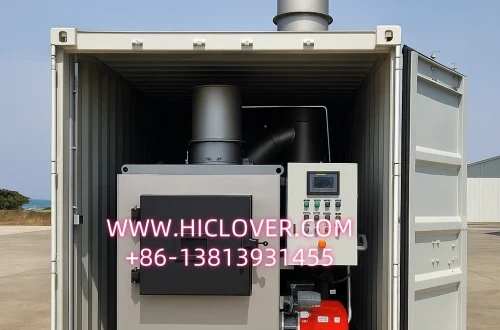
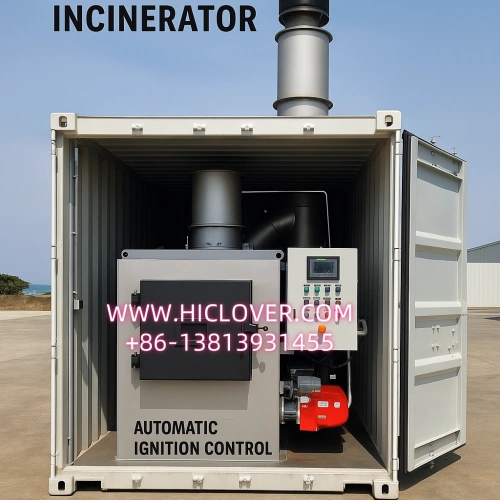
New Medical Incinerator Ready for Afghanistan and Macau

incinerator 3

Items/Model TS10(PLC) TS20(PLC) TS30(PLC) TS50(PLC) TS100(PLC)
Burn Rate 10 kg/hour 20 kg/hour 30 kg/hour 50 kg/hour 100 kg/hour
Feed Capacity 20kg 40kg 60kg 100kg 200 kg
Control Mode PLC PLC PLC PLC PLC
Combustion Chamber 100L 210L 330L 560L 1200L
Internal Dimensions 50x50x40cm 65x65x50cm 75x75x60cm 100x80x70cm 120x100x100cm
Secondary Chamber 50L 110L 180L 280L 600L
Smoke Filter Chamber Yes Yes Yes Yes Yes
Feed Mode Manual Manual Manual Manual Manual
Voltage 220V 220V 220V 220V 220V
Power 0.5Kw 0.5Kw 0.5Kw 0.7Kw 0.7Kw
Oil Consumption (kg/hour) 5.4–12.6 7.8–16.3 10.2–20 12.1–24 14–28
Gas Consumption (m3/hour) 6.2–11.4 8–15.7 9.8–20 9.9–26.1 10–32.2
Temperature Monitor Yes Yes Yes Yes Yes
Temperature Protection Yes Yes Yes Yes Yes
Oil Tank 100L 100L 100L 100L 200L
Feed Door 30x30cm 45x40cm 55x50cm 70x55cm 80x60cm
Chimney 3Meter 3Meter 5Meter 5Meter 10Meter
Chimney Type Stainless Steel Stainless Steel Stainless Steel Stainless Steel Stainless Steel
1st. Chamber Temperature 800℃–1000℃ 800℃–1000℃ 800℃–1000℃ 800℃–1000℃ 800℃–1000℃
2nd. Chamber Temperature 1000℃-1200℃ 1000℃-1200℃ 1000℃-1200℃ 1000℃-1200℃ 1000℃-1200℃
Residency Time 2.0 Sec. 2.0 Sec. 2.0 Sec. 2.0 Sec. 2.0 Sec.
Gross Weight 1500kg 2200kg 3000kg 4500kg 6000kg
External Dimensions 140x90x120cm 160x110x130cm 175x120x140cm 230x130x155cm 260x150x180cm

Medical Incinerator, Animal Crematory, MSW Incinerator

Nanjing Clover Medical Technology Co., Ltd. is a leading waste incinerator manufacturer in China. We are local  manufacturer and one of the largest exporter of China. Pyrolytic incinerator equipment technical is main waste treatment all of the world, for Medical Waste, Animal Incineration, Pet cremation and other Solid wste. The capacity from 10kgs/Hr. to 500kgs/Hr., up to 6ton per day. Presently, we supply different series for local customer requirements and design updated incinerator with our leading technology. The updated design feature of our range of incinerators make them one of the most cost effective in the world.

Application Scope

1. Hospital& clinic: Iatric Waste, Infectious Waste, Dressing, Bio-Waste, Medicine.
2. Slaughter House &Pet Hospital &Farm: Dead Animal, Bio-Waste.
3. Community & Sea Port & Station: Municipal Solid Waste, etc.
4. Laboratories, Remote Locations, Disaster Relief Operations, Animal Cremation

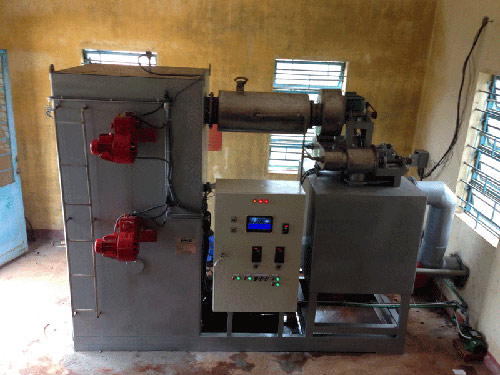
Small Waste Incinerators 30 and 50kgs

Small Waste Incinerators 30 and 50kgs

we produce small scale waste incinerators, the capacity from 10kgs,20kgs,30kgs,50kgs,100kgs per hour.

Key Features:
* All models with Dual combustion chamber.
* Stainless Steel chimney/stack, long lifetime.
* High temperature, long lifetime of incinerator.
* Free or minimum installation on site.
* High burn rate, from 10kgs to 600kgs per hour, up to 10ton per day.
* PLC Control Plane for Intelligent operation.
* New Design for pet animal cremation business.
* One year warranty on incinerator and parts in stock.

small waste incinerator

Small-Scale Medical Waste Incinerators: Global Outlook and Strategic Significance

Small-Scale Medical Waste Incinerators: Global Outlook and Strategic Significance

Proper management of medical waste is a critical global issue. In regions lacking centralized waste treatment infrastructure, small-scale incinerators have become indispensable. From rural clinics to emergency zones, they offer a practical, immediate solution for safely eliminating hazardous waste. As the global demand grows, international institutions and responsible manufacturers are shaping a more sustainable and responsive incineration landscape.

Global Market Dynamics and Growth Drivers

The global market for small-scale medical waste incinerators is undergoing steady expansion. With increasing urbanization, healthcare outreach, and regulatory tightening, demand is projected to double in the next decade. Nations across Asia-Pacific, Africa, and Latin America are investing in compact incineration solutions to reduce public health risks and comply with environmental norms.

Key growth factors include:

  • Rising healthcare waste generation due to expanded medical services

  • Regulatory enforcement of safe waste disposal methods

  • Technological advances in portable and low-emission incineration systems

Small-scale incinerators, particularly those handling less than 1 ton per hour, serve a growing share of the market, especially where centralized treatment is unavailable or unreliable.

Institutional Influence: The Role of the UN and NGOs

The United Nations and its agencies, especially the World Health Organization (WHO) and UNDP, have been instrumental in developing international incineration guidelines and funding deployments in resource-limited settings.

These organizations emphasize:

  • High-temperature dual-chamber systems that meet global standards for complete combustion

  • Equipment that aligns with WHO and EU directives on emissions and safety

  • Field-ready solutions for emergency response and post-conflict recovery

Examples include WHO-led installations in Sierra Leone and South Sudan, UNOPS procurement of mobile incinerators for remote labs, and NGO-driven projects by Médecins Sans Frontières (MSF) using incinerators in temporary clinics and refugee camps.

Application Scenarios: Where Small Incinerators Matter Most

Small incinerators prove essential in:

1. Remote and Underserved Regions

Rural clinics and health posts in countries such as Tanzania, Papua New Guinea, and Nepal lack access to national waste networks. On-site incineration ensures infectious materials like sharps and dressings are destroyed safely, preventing open burning or uncontrolled dumping.

2. Disaster and Conflict Zones

During crises, fast deployment of incinerators is critical. Containerized units serve temporary hospitals in earthquake-hit or war-torn areas. UN peacekeeping forces and humanitarian agencies frequently rely on mobile incinerators to protect health in volatile environments.

3. Mobile Field Operations

Refugee camps, military outposts, and remote aid missions benefit from trailer-mounted or skid-based incinerators. Their ease of transport and setup provides flexible, compliant waste handling with minimal infrastructure.

HICLOVER: Practical Innovation for Demanding Environments

HICLOVER has emerged as a trusted provider of incineration systems tailored for real-world challenges. Its product line matches international expectations for safety, efficiency, and adaptability.

Key Advantages:

  • Dual-combustion chambers operating at up to 1300°C ensure complete waste destruction

  • Portable designs: containerized or trailer-mounted for rapid deployment

  • Automation features: PLC control, temperature monitoring, safety shutoffs

  • Emission controls: optional scrubbers and filters to reduce environmental impact

  • Global certification: CE-marked, ISO-compliant, suitable for UN and NGO procurement

HICLOVER’s incinerators are already deployed in UN-supported health projects, emergency field operations, and rural health facilities across various continents. Their rugged construction, fuel efficiency, and compliance-ready design make them an ideal fit for institutions seeking reliable, field-tested waste treatment.

Incineration as a Strategic Health Tool

As the global community pursues more equitable and resilient healthcare systems, small-scale incinerators are not just tools―they are strategic infrastructure. Backed by institutional support and technological refinement, they bridge the gap between immediate need and long-term sustainability.

Organizations that invest in modern, compliant, and adaptable systems like HICLOVER not only fulfill waste disposal needs but also align with global public health goals and environmental responsibility. In an era of shifting risk and rising health demand, these compact solutions offer a scalable answer to one of the most urgent sanitation challenges of our time.

Mobile: +86-13813931455(WhatsApp)

Email:     [email protected]     
Email:     [email protected] 


2025-12-11/12:16:23

Incinerator Items/Model

HICLOVER TS100(PLC)


Burn Rate (Average)

100kg/hour

Feed Capacity(Average)

150kg/feeding

Control Mode

PLC Automatic

Intelligent Sensor

Continuously Feeding with Worker Protection

High Temperature Retention(HTR)

Yes (Adjustable)

Intelligent Save Fuel Function

Yes

Primary Combustion Chamber

1200Liters(1.2m3)

Internal Dimensions

120x100x100cm

Secondary Chamber

600L

Smoke Filter Chamber

Yes

Feed Mode

Manual

Burner Type

Italy Brand

Temperature Monitor

Yes

Temperature Thermometer

Corundum Probe Tube, 1400℃Rate.

Temperature Protection

Yes

Automatic Cooling

Yes

Automatic False Alarm

Yes

Automatic Protection Operator(APO)

Yes

Time Setting

Yes

Progress Display Bar

3.7 in” LCD Screen

Oil Tank

200L

Chimney Type

 Stainless Steel 304

1st. Chamber Temperature

800℃–1000℃

2nd. Chamber Temperature

1000℃-1300℃

Residency Time

2.0 Sec.

Gross Weight

7000kg

External Dimensions

270x170x190cm(Incinerator Main Body)

Burner operation

Automatic On/Off

Dry Scrubber

Optional

Wet Scrubber

Optional

Top Loading Door

Optional

Asbestos Mercury Material

None

Heat Heart Technology(HHT)

Optional

Dual Fuel Type(Oil&Gas)

Optional

Dual Control Mode(Manual/Automatic)

Optional

Temperature Record

Optional

Enhanced Temperature Thermometer

Optional

Incinerator Operator PPE Kits

Optional

Backup Spare Parts Kits

Optional

Mobile Type

Optional:Containerized/Trailer/Sledge Optional

Local company helps dispose of Ebola-tainted waste

SAN DIEGO – A local company has joined the front lines of an effort that has sparked a lot of debate: how to dispose of Ebola waste.

A representative from Envitech just returned from Texas after the first batch of medical waste was disposed of this past weekend.

The spacesuit-like gear is just one reminder of how contagious Ebola can be. The virus attacks the organs and liquefies parts of the body, with blood and other liquids seeping out of all body openings.

The medical supplies used to treat the first U.S. Ebola patient, Thomas Duncan, arrived in a semi-truck at a Galveston facility on Saturday.

“It was kind of all hands on-deck,” said Andy Bartocci, national sales manager at Envitech. He says a company official flew into Texas this weekend.

Envitech’s scrubbing system was installed at the Galveston site earlier this year. Here is how it works: once the Ebola-tainted supplies are incinerated at more than 2,000 degrees, the scrubber removes all the pollutants from the exhaust gas.

“We were on hand as they were burning this waste and the system operated flawlessly throughout that time,” said Bartocci.

The air scrubbers are newly designed after more stringent EPA standards went into effect this month.

“Somebody is probably more exposed to harmful pollutants pumping gas into their automobile than they would be by working or living around one of the medical waste incinerators,” said Bartocci.

Still, some states do not want that waste. Missouri’s attorney general is seeking a court order barring the waste from being shipped to a St. Louis incinerator. Among the concerns is the handling before it gets into the incinerator.

As for California, the state has a ban on the burning of medical waste, so any Ebola waste would have to be shipped to another state on public highways.

Many states like California began cracking down on medical waste incineration because hospitals were sending materials that did not need to be burned, which led to more pollutants.

Some are calling for California to reconsider these restrictions when it comes to Ebola waste.

by: http://www.10news.com/news/local-company-helps-dispose-of-ebola-tainted-waste-10202014

Waste Burning and Incineration Combustion Process

The combustion, or burning, of solid waste proceeds through a series of stages. Water is first driven from the unburned waste by heat produced from material burning nearby or from an auxiliary burner. As the waste heats up, carbon and other substances are released and converted into burnable gases. This is referred to as gasification. These gases are then able to mix with oxygen. If the temperature inside the burn chamber is high enough and maintained for a long enough period of time, the hot gases are completely converted into water vapour and carbon dioxide, which is then released into the air. If the temperature inside the burn chamber is not high enough and the burn time is too short, complete conversion of the burnable gases does not occur and visible smoke is released into the air.  Another result of burning at low temperatures is the creation of pollutants that were not originally present in the waste. This process is known as de novo synthesis. Dioxins, furans and other complex chemical pollutants can be formed through this process.

Ash produced from combustion takes the form of either fly ash or bottom ash.  Fly ash is the fine particles carried away in the form of smoke while bottom ash is the course non-combustible and unburned material that remains after the burn is complete. The type and amount of pollutants in the fly and bottom ash depend upon what waste is burned and completeness of the combustion process.

The completeness of combustion is determined by all of the following factors:

Temperature

The temperature generated is a function of the heating value of the waste and auxiliary fuel, incinerator or burn unit design, air supply and combustion control.  Complete combustion requires high temperatures. Generally, temperatures that exceed 650oC with a holding time of 1-2 seconds will cause complete combustion of most food and other common household waste.  Segregation of waste is required when using methods that don’t routinely achieve these temperatures. Dual chamber incinerators, which are designed to burn complex mixtures of waste, hazardous waste and biomedical waste, must provide a temperature higher than 1000oC and a holding time of at least one second to ensure complete combustion and minimize dioxin and furan emissions.  When these high temperatures and holding times are achieved, waste will be completely burned and ash, smoke and pollutant concentrations will be minimized.

Because exhaust gas temperatures vary from ambient to greater than 1000°C each time a batch waste incinerator is used, optional air pollution control systems with evaporative cooling towers and scrubbers are seldom recommended. However, it may be necessary to employ these systems with large continuous feed incinerators if additional cleaning of exhaust gas is required by regulatory authorities.

Holding Time

Complete combustion takes time.  Holding time, otherwise known as retention or residence time, is the length of time available to ensure the complete mixing of air and fuel, and thus the complete burning of waste. Low temperatures, low heating values of the waste and reduced turbulence require that the holding time be increased to complete the combustion process.

Turbulence

The turbulent mixing of burnable gases with sufficient oxygen is needed to promote good contact between the burning waste and incoming air. This will help in achieving the high temperatures at which waste can be completely burned. The amount of mixing is influenced by the shape and size of the burn chamber and how the air is injected. Passive under-fire ventilation achieved during open burning does not result in sufficient turbulence for the burning of a wide variety of waste.  Also, it is important not to overfill the burn chamber as airflow may be blocked and the amount of turbulence further reduced.  The more advanced incineration designs provide effective turbulence through the forced introduction of air directly into hot zones.

Composition of the Waste

The heating value, wetness and chemical properties of the waste affect the combustion process and the pollutants that are contained in the resulting smoke and ash. The higher the burn temperature, holding time and turbulence that are achieved, the less effect the composition of the waste has on completeness of the burn.

Modular Rapid-Deployment Incineration Systems for Disaster Response and Epidemic Material Centers

Modular Rapid-Deployment Incineration Systems for Disaster Response and Epidemic Material Centers


National emergency warehouses and epidemic prevention material reserves play a vital role in responding to crises such as pandemics, floods, and earthquakes. These facilities stockpile large volumes of personal protective equipment (PPE), disinfectants, and single-use medical items that can expire or become contaminated during prolonged storage. The safe disposal of such materials is crucial for maintaining environmental safety and readiness for new emergencies. The HICLOVER modular rapid-assembly incineration system provides a highly efficient, mobile, and fully self-contained solution for these needs across Asia, Africa, and Latin America.


Emergency Waste Challenges in National and Regional Storage Centers

Emergency stockpiles, including disease-control warehouses and civil defense logistics hubs, often face the challenge of disposing of expired gloves, masks, and disposable instruments without disrupting operations. Open-air burning or simple burial creates biohazard risks and violates modern environmental regulations.
Countries such as Malaysia, Kenya, and Peru have established centralized epidemic material reserves, but many lack permanent waste treatment infrastructure. For these situations, modular incineration units that can be deployed and operational within 24C48 hours are the most practical choice.


HICLOVER Modular Incineration System Overview

The HICLOVER modular incinerator is designed for rapid setup, minimal maintenance, and reliable combustion of PPE, packaging, and biological residues. It features:

  • Primary combustion chamber: 850C950 °C for complete waste destruction.

  • Secondary chamber: ≥1100 °C with ≥2 s gas retention for clean gas oxidation.

  • PLC-based automatic control system for accurate temperature and safety management.

  • Pre-assembled modular frame, allowing containerized shipping and quick installation.

  • Dry filtration and optional activated-carbon adsorption to meet emission standards.

  • Fuel flexibility: compatible with diesel, LPG, or natural gas.

  • Corrosion-resistant exterior suitable for tropical and coastal deployment.

These systems comply with GB 18484-2020 and WHO environmental guidelines, ensuring safe use in both civilian and military emergency logistics.


Application in Disaster and Epidemic Response

HICLOVER modular systems are ideally suited for:

  • National emergency warehouses handling expired epidemic stockpiles.

  • Regional pandemic response centers disposing of used PPE and test kits.

  • Temporary field bases established for quarantine, humanitarian aid, or disease control.

  • Government preparedness facilities requiring mobile waste destruction capacity.

In locations such as Indonesia’s disaster logistics centers or Ethiopia’s regional health depots, containerized incinerators enable safe waste treatment without the need for permanent construction.


Environmental and Operational Advantages

  • 95% volume reduction of solid waste.

  • Full sterilization and odor elimination.

  • Compact modular design for fast on-site deployment.

  • Plug-and-play operation requiring minimal technical training.

  • Suitable for long-term standby storage at emergency centers.

These systems ensure that emergency facilities maintain environmental compliance and operational readiness, even under rapidly changing conditions.


Global Partner in Emergency Environmental Systems

With decades of manufacturing and export experience, HICLOVER delivers turnkey containerized and modular incineration solutions trusted by government agencies, humanitarian organizations, and defense logistics worldwide. The company’s systems integrate seamlessly with air-filtration modules from CloverFilter, ensuring both safety and sustainability in emergency waste management.

Learn more:
www.hiclover.com | Modular Incinerator Systems | Emergency Waste Disposal Units | CloverFilter Air Filtration Solutions | Contact HICLOVER


Keywords: modular incinerator, emergency waste disposal, epidemic prevention material center, national disaster warehouse, PPE incineration system, rapid-deployment incinerator, HICLOVER environmental equipment.

Mobile: +86-13813931455(WhatsApp)

Email:     [email protected]     
Email:     [email protected] 


2025-11-04/08:57:58

Incinerator Items/Model

HICLOVER TS100(PLC)


Burn Rate (Average)

100kg/hour

Feed Capacity(Average)

150kg/feeding

Control Mode

PLC Automatic

Intelligent Sensor

Continuously Feeding with Worker Protection

High Temperature Retention(HTR)

Yes (Adjustable)

Intelligent Save Fuel Function

Yes

Primary Combustion Chamber

1200Liters(1.2m3)

Internal Dimensions

120x100x100cm

Secondary Chamber

600L

Smoke Filter Chamber

Yes

Feed Mode

Manual

Burner Type

Italy Brand

Temperature Monitor

Yes

Temperature Thermometer

Corundum Probe Tube, 1400℃Rate.

Temperature Protection

Yes

Automatic Cooling

Yes

Automatic False Alarm

Yes

Automatic Protection Operator(APO)

Yes

Time Setting

Yes

Progress Display Bar

3.7 in” LCD Screen

Oil Tank

200L

Chimney Type

 Stainless Steel 304

1st. Chamber Temperature

800℃–1000℃

2nd. Chamber Temperature

1000℃-1300℃

Residency Time

2.0 Sec.

Gross Weight

7000kg

External Dimensions

270x170x190cm(Incinerator Main Body)

Burner operation

Automatic On/Off

Dry Scrubber

Optional

Wet Scrubber

Optional

Top Loading Door

Optional

Asbestos Mercury Material

None

Heat Heart Technology(HHT)

Optional

Dual Fuel Type(Oil&Gas)

Optional

Dual Control Mode(Manual/Automatic)

Optional

Temperature Record

Optional

Enhanced Temperature Thermometer

Optional

Incinerator Operator PPE Kits

Optional

Backup Spare Parts Kits

Optional

Mobile Type

Optional:Containerized/Trailer/Sledge Optional

Medical Waste Incinerator Technical Documentation for Hospital Projects in Ghana

Medical Waste Incinerator Technical Documentation for Hospital Projects in Ghana

Hospital waste management teams often begin their search not with equipment brands, but with technical documentation. For public hospitals, regional facilities, and EPC contractors, documentation defines whether a medical waste incinerator can be reviewed, approved, installed, and operated safely within an existing healthcare environment. In Ghana, where infectious waste, sharps, and pharmaceutical residues form the bulk of hospital waste streams, clear and structured technical information is a practical requirement rather than a formality.

For many procurement teams, searches related to medical waste incinerator technical documentation Ghana are driven by the need to understand system configuration, operating logic, and maintenance expectations before any procurement decision is considered.


Why Technical Documentation Matters in Hospital Waste Projects

In daily hospital operations, waste handling is closely tied to infection control and staff safety. Incineration remains a commonly adopted treatment method because it provides immediate volume reduction and pathogen destruction on site. However, decision-makers are typically cautious about emissions, operational complexity, and long-term reliability.

Technical documentation serves several purposes:

  • It allows hospital engineers to evaluate combustion logic and temperature control.

  • It supports project review by ministries, NGOs, or donor-funded programs.

  • It helps operators understand daily routines, safety interlocks, and maintenance intervals.

Without adequate documentation, even a technically sound incinerator can be difficult to approve or operate.


Core System Description Commonly Reflected in Documentation

Dual-Chamber Combustion Layout

A standard section in medical waste incinerator documentation describes the dual-chamber structure. The primary chamber is dedicated to direct combustion of medical waste, typically operating around 850 °C. This chamber is designed for batch or semi-continuous feeding, depending on hospital scale.

The secondary chamber is positioned downstream to re-burn flue gases generated from the first stage. Operating temperatures may reach approximately 1100 °C, supporting further oxidation of volatile compounds. This configuration is commonly adopted for hospitals to reduce visible smoke and residual odors associated with incomplete combustion.

Such layouts are designed in line with common healthcare waste management practices rather than site-specific experimentation.


Temperature Control and Combustion Stability

Technical documentation usually places strong emphasis on temperature stability. Burner selection, refractory lining, and airflow control are described together, explaining how steady thermal conditions are maintained during operation.

For hospitals facing intermittent power supply, diesel-fired systems are frequently specified. Documentation clarifies how fuel-based burners maintain consistent heat input independent of grid reliability, which is a practical consideration in many regions of Ghana.


Automation Logic and PLC Control Description

Another key section of medical waste incinerator technical documentation covers automation. PLC-based control systems coordinate burner ignition, temperature monitoring, alarm handling, and safety interlocks.

From an operator’s perspective, this reduces reliance on constant manual adjustment. From a project review perspective, it demonstrates that the system follows a structured operating sequence suitable for small hospitals, clinics, and regional facilities with limited technical staff.

Documentation typically includes control philosophy descriptions, alarm lists, and basic operation flow charts rather than software source code.


Flue Gas Treatment Options Explained in Project Documents

Hospitals vary widely in size and budget, and documentation often presents flue gas treatment as a modular option. Dry treatment systems using alkaline materials are commonly described as baseline configurations, offering acid gas neutralization with relatively low maintenance requirements.

For projects with higher emission control expectations, wet scrubber systems may be outlined as optional modules. These sections explain functional principles―such as quenching, washing, and particulate removal―without claiming absolute regulatory compliance, allowing project owners to align configurations with local review requirements.


Matching Documentation to Hospital Scale

Well-prepared documentation differentiates between applications:

  • Small hospitals and clinics typically review compact units with manual feeding and limited throughput.

  • Regional hospitals often require systems suitable for extended daily operation.

  • Teaching hospitals may request more detailed operational descriptions to support staff training.

By presenting system capacities, duty cycles, and maintenance routines clearly, documentation helps procurement teams compare options without relying on marketing language.


HICLOVER Documentation Approach as a Manufacturer

HICLOVER operates as a manufacturing factory supplying standardized medical waste incinerator models for export markets. Its technical documentation packages typically include general arrangement drawings, process descriptions, operating manuals, and maintenance guidance aligned with commonly adopted hospital configurations.

Export experience allows documentation to be structured for remote review, supporting EPC contractors, NGOs, and hospital engineers conducting technical assessments through English-language searches. Reference materials and system overviews are available through the official website:
https://www.hiclover.com/

This documentation-focused approach is intended to support project evaluation and long-term operation rather than short-term procurement decisions.


Practical Focus for Hospital Decision-Makers

When reviewing medical waste incinerator technical documentation in Ghana, stakeholders often look beyond capacity figures. Clear explanations of combustion stages, automation logic, emission control options, and maintenance routines are central to confidence in daily operation.

For hospitals and project teams relying on English-language technical searches, structured and transparent documentation remains a key step in selecting an incineration solution that can be realistically operated within existing healthcare constraints.

Mobile: +86-13813931455(WhatsApp)

Email:     [email protected]     
Email:     [email protected] 


2026-01-09/14:15:27

Incinerator Suppliers in Djibouti: How to Source a Reliable Waste Incinerator for Port Cities, Camps, and Critical Facilities

Incinerator Suppliers in Djibouti: How to Source a Reliable Waste Incinerator for Port Cities, Camps, and Critical Facilities

Djibouti holds a unique position in the Horn of Africa. With its international port operations, logistics hubs, military and humanitarian presence, and growing urban services, the demand for controlled waste disposal is increasing. For many projects, the challenge is not only “how to dispose of waste,” but how to do it safely, quickly, and with predictable operation in a coastal, high-temperature environment.

That’s why more buyers are searching for incinerator suppliers in Djibouti—looking for a proven waste incinerator solution that can support hospitals, port-related facilities, remote camps, and municipal services without complex installation requirements.

To compare market options quickly, you can search here:
https://www.google.com/search?q=incinerator+suppliers+in+Djibouti


Why Djibouti Projects Often Prefer Waste Incinerator Solutions

Djibouti’s real operating scenarios are often time-sensitive and site-limited:

  • Port areas where waste must be managed efficiently

  • Remote camps where disposal infrastructure is minimal

  • Clinics and hospitals handling infectious materials

  • Industrial and logistics compounds needing stable daily waste reduction

A modern waste incinerator provides direct on-site volume reduction and hygienic disposal, helping projects reduce transport pressure and avoid uncontrolled dumping or burning.

Key benefits include:

  • High-temperature combustion for rapid destruction

  • Reduced waste volume to simplify logistics

  • Lower odor and smoke compared with open burning

  • Safer handling of medical and hazardous waste

  • Expandable emission-control options based on compliance needs

As global attention grows around public health security, environmental responsibility, and “clean logistics” supply chains, these advantages are increasingly important for procurement decisions.


HICLOVER: Factory-Direct Incinerator Supplier for Djibouti Buyers

When searching incinerator suppliers in Djibouti, buyers often find many online offers. But the difference between a broker and a manufacturer becomes critical when it’s time to deliver performance, spare parts support, and long-term reliability.

HICLOVER is a factory-based manufacturer focused on export-ready waste incinerator systems for international markets. Factory supply means you get:

  • Stable manufacturing and standardized build quality

  • Professional selection based on waste type and capacity

  • Export packaging and shipping experience

  • Clear service logic and spare parts planning

  • Mobile solutions designed for fast deployment

Official website (factory supplier):
https://www.hiclover.com/


Where Waste Incinerators Are Used in Djibouti

1) Hospitals, Clinics, and Healthcare Waste Control

Healthcare waste requires strict handling because it may contain infectious materials, sharps packaging, contaminated dressings, and plastic waste streams. A properly designed medical waste incinerator can support safer disposal with controlled high temperature.

Typical users:

  • Public hospitals

  • Private clinics

  • Medical testing labs

  • Emergency response stations

2) Port, Logistics, and Industrial Facilities

Port zones generate continuous mixed waste: packaging, food waste, textiles, and operational residues. A robust solid waste incinerator can reduce volume quickly, helping maintain hygiene and prevent waste accumulation in high-traffic areas.

Typical users:

  • Port operators

  • Warehousing and logistics hubs

  • Industrial compounds

  • Security-managed facilities

3) Camps and Remote Support Sites

In remote or controlled zones, a fast-deployment mobile waste incinerator is often more practical than building a full disposal facility. These sites usually prioritize quick commissioning and stable operation.

Typical users:

  • Work camps

  • Temporary support camps

  • Remote infrastructure projects

  • Humanitarian facilities


Technical Features That Matter When Buying a Waste Incinerator

Dual-Chamber High-Temperature Combustion

A modern dual chamber waste incinerator is designed to increase burnout quality and reduce odor.

  • Primary chamber: direct waste incineration

  • Secondary chamber: oxidation of flue gas at higher temperature

This staged approach helps:

  • Reduce visible smoke

  • Improve destruction of organics

  • Support cleaner exhaust stability

  • Handle waste variability more reliably

PLC Automation: Lower Operator Burden, Higher Safety

In many export projects, stable operation depends on reducing human error. A PLC controlled waste incinerator supports repeatable operation by managing:

  • ignition and shutdown logic

  • temperature control cycles

  • burner interlocks and safety alarms

  • fan/draft coordination

  • system status monitoring

Automation is especially valuable for healthcare and facility operators who need daily consistency.

Modular Emission Control: Dry and Wet Options

Different Djibouti projects may require different emission-control configurations, depending on site type and procurement standards. HICLOVER provides selectable modules including:

  • Dry scrubber system (standard option): stable, practical, cost-effective

  • Wet scrubber system (optional): stronger washing capacity for more demanding conditions

  • Upgrade-ready layouts for future compliance needs

This modular strategy keeps procurement flexible while maintaining a clear upgrade path.


Plug-and-Play & Containerized Incinerators: A Strong Fit for Djibouti

Djibouti has a natural advantage in container logistics, and this matches a growing global trend: containerized waste incinerator systems that are factory-integrated and shipped as a complete module.

HICLOVER plug-and-play solutions focus on:

  • Reduced installation time

  • Minimal site civil work

  • Faster project commissioning

  • Simplified relocation if needed

For port-adjacent projects, camps, and remote facilities, a containerized mobile incinerator can be a highly practical choice.


Factory Supply Advantage: Why It Matters for Djibouti Procurement

Choosing a factory-backed supplier is not only about buying equipment—it is about project reliability.

HICLOVER factory supply advantages include:

  • stable production control and consistent quality

  • professional matching of capacity and waste type

  • export-ready packing and documentation support

  • spare parts strategy for long-term operations

  • customization options for fuel, power, and mobility

For buyers evaluating incinerator suppliers in Djibouti, these details reduce risk and improve long-term value.


Fuel Flexibility for Coastal and Remote Operations

Fuel availability can vary by project site. HICLOVER waste incinerator systems can be configured for:

  • Diesel fuel (common for remote and standby applications)

  • Natural gas (where supply is stable)

  • LPG (practical where cylinder supply is convenient)

This flexibility helps buyers optimize operating cost and ensure continuity.


Buyer Checklist: Before Contacting Incinerator Suppliers in Djibouti

Before ordering, confirm:

  1. Waste type: medical, municipal, animal, mixed waste

  2. Target capacity: kg/h or tons/day

  3. Control requirement: manual or PLC automatic

  4. Emission module: basic, dry scrubber, wet scrubber

  5. Site conditions: space, installation limits, power stability

  6. Mobility preference: fixed, skid, trailer, containerized

A supplier who can guide these points clearly is usually the supplier who can deliver stable performance.


Conclusion: A Practical Way to Source Waste Incinerators in Djibouti

With increasing demand from port operations, healthcare services, remote camps, and municipal growth, modern waste incinerator systems are becoming essential. For buyers searching incinerator suppliers in Djibouti, the best results usually come from working directly with a factory-backed manufacturer that can provide strong engineering, automation, and deployment flexibility.

HICLOVER delivers export-ready waste incinerators with dual-chamber combustion, PLC automation, modular emission-control options, and plug-and-play mobile solutions for overseas projects.

Official website:
https://www.hiclover.com/


Résumé (Français)

Pour les acheteurs recherchant des incinerator suppliers in Djibouti, un waste incinerator fiable doit offrir une combustion haute température, une structure à double chambre, un contrôle PLC automatique et des options de traitement des fumées (sec ou humide). HICLOVER propose des solutions exportables, mobiles et modulaires, adaptées aux hôpitaux, ports, camps et sites isolés.

Resumen (Español)

Para quienes buscan incinerator suppliers in Djibouti, es importante elegir un waste incinerator con combustión de alta temperatura, doble cámara, automatización PLC y opciones modulares de control de emisiones (seco o húmedo). HICLOVER ofrece sistemas exportables, móviles y “plug-and-play” para hospitales, zonas portuarias, campamentos y proyectos remotos.

Mobile: +86-13813931455(WhatsApp)

Email:     [email protected]     
Email:     [email protected] 


2026-01-20/01:04:57

RESORT FIRM IN BATTLE TO BEAT EBOLA CRISIS

THE UNITED Nations have called on a Southport firm to help them tackle the growing Ebola crisis.

The deadly virus, for which there is no known cure, has killed over 4,500 people since an outbreak began in Guinea in 2013, spreading to Liberia and Sierra Leone before the virus made its way into America and Spain.

To combat the spread of the virus thousands of aid workers and doctors from around the world have traveled to West Africa to treat those who have fallen ill and as a result, use tonnes of materials which become hazardous and need to be disposed of via incinerators.

As such, the world’s largest incinerator manufacturer, based on Southport’s Canning Road Industrial estate, has been drafted in by the United Nations to provide a plethora of incinerators for disposing hazardous material.

Bosses at Inciner8 say they are delighted to be working closely with the United Nations for Incinerators to the areas of West Africa currently hit by the deadly Ebola virus.

The range of incinerators available from Inciner8 are ready made for the burning of hazardous waste ranging from the smallest and most mobile medical waste Incinerator to the largest Incinerator capable of burning up to 1000kg per hour.

Paul Niklas, Sales and Marketing director for Inciner8, told The Champion: “We appreciate fully and understand the terrible issues faced by the people of West Africa and the support agencies in place to combat the daily problems that exist.

”We will be endeavouring fully to ensure that we send our products in the quickest possible time with our engineers to support both installation and training as part of our committed service in reducing and eliminating the spread of this disease by transporting contaminated materials to other locations.

“Inciner8 continue to take the lead on many fronts and are currently working with other government agencies and Aid organisations as the innovation leader in the global Incineration market.

”The Ebola incinerators are being made and shipped out as we speak.

“It’s a natural procedure for us; we’ve done this for other disasters such as the war in Iraq.

”During our time in Iraq we had to deal with all sorts of residue, waste and contamination mainly for military purposes. “We’ve also supplied incinerators to the police in South America.

”However the Ebola virus is definitely up there as one of the worst cases we have faced – there is major risk in contaminated medical waste.

“What we do is provide a safe environment for people to burn waste, which is obviously far better than burning it in uncontrolled environments.

”You can take the incinerators to the problem. It’s impossible to guess what will happen next as things are changing on a day-to-day basis.

“We were first contacted about two and a half months ago. Normally we send our own people out, however it’s not something that we’ve been able to do this time as a result of the risk.”

In August 2014, the World Health Organisation declared the West Africa Ebola epidemic to be an international public health emergency.

Urging the world to offer aid to the affected regions, the Director-General said: “Countries affected to date simply do not have the capacity to manage an outbreak of this size and complexity on their own.

”I urge the international community to provide this support on the most urgent basis possible.“

By mid-August 2014, Doctors Without Borders reported the situation in Liberia’s capital Monrovia as ”catastrophic“ and ”deteriorating daily“.

As of October 15, 2014, there have been 17 cases of Ebola treated outside of Africa, four of whom have died.

In early October, Teresa Romero, a 44-year-old Spanish nurse, contracted Ebola after caring for a priest who had been repatriated from west Africa.

This was the first transmission of the virus to occur outside of Africa.

On September 19, Eric Duncan flew from his native Liberia to Texas; five days later he began showing symptoms and visited a hospital, but was sent home.

His condition worsened and he returned to the hospital on September 28, where he eventually passed away.

Health officials confirmed a diagnosis of Ebola on September 30 – the first case in the United States.

On October 12, the Centers for Disease Control and Prevention confirmed that a nurse in Texas who had treated Duncan was found to be positive for the Ebola virus, the first known case of the disease to be contracted in the United States.

On October 15 a second Texas healthcare worker was confirmed to have the virus.

British Nurse Will Pooley, who survived Ebola, has already returned to Sierra Leone where he caught the deadly virus.

by: http://www.champnews.com/newsstory.aspx?story=3058174